The Drive-Thru Revival
The drive-thru has always been a uniquely American invention, born of a culture built on cars and fueled by a desire to do everything faster. It started with banks and burger joints, spread to coffee shops and pharmacies, and eventually became so normal that most of us barely noticed how much of daily life was conducted from the driver’s seat. But for decades, convenience stores — businesses literally built on the promise of speed and ease — sat mostly on the sidelines. Some experimented with windows, but the majority kept their focus on the inside of the store. The logic seemed sound: wasn’t the entire model already built around getting people in and out quickly? Why carve out a lane when the parking lot was already right there?
That logic is being rethought, and fast. In 2025, the drive-thru is enjoying a full-scale revival, and this time it isn’t confined to fast-food giants or specialty coffee chains. Convenience stores are entering the game in earnest. From regional chains with dozens of sites to independents operating a single location, operators are discovering that customers don’t just want convenience in theory — they want it without leaving the car. What began as a trickle of experiments during the pandemic has turned into a defining trend of the mid-2020s, and it is changing the way people think about what convenience retail can be.
You can trace the momentum back to foodservice. Ten or fifteen years ago, many convenience stores couldn’t have supported a drive-thru even if they wanted to. The menus were too thin, the preparation too slow, and the perception of quality too low. Coffee might have been strong, but sandwiches and hot meals weren’t yet competitive with quick-service restaurants. Today, that has changed. Pizza programs rival the local pizzeria. Fried chicken is seasoned and crispy enough to earn repeat customers. Breakfast menus are wide enough to compete with national coffee brands. Customers already trust c-stores to deliver real meals, not just snacks. Extending that trust into a drive-thru lane feels natural.
The pandemic accelerated this reality. When contactless service became the norm, the idea of staying in your car for everything — groceries, prescriptions, dinners, even pet food — suddenly felt essential. People learned how much time they could save, how safe they could feel, and how simple errands could become when they didn’t have to unbuckle kids or step out into the weather. Even after restrictions lifted, those habits stuck. In fact, they hardened into expectations. Customers began to look at every business through the same lens: can I do this from the car? If the answer is yes, they’re more likely to stop. If the answer is no, they may pass you by.
Convenience stores are discovering that the presence of a drive-thru doesn’t just serve customers in the moment. It also changes perception. In surveys, more than two-thirds of consumers say they are more likely to choose a store with drive-thru over one without it, even if they don’t plan to use the lane every time. The window itself becomes a symbol of modernity. It tells customers that this business values their time, understands their routines, and has invested in making things easier. That signal is worth as much as the sales it generates, because it shapes how customers think about the brand.
Operators who have added drive-thru are already seeing the payoff. A regional chain in Texas carved out a lane for coffee, tacos, and energy drinks, staffing it only during morning peaks. Within six months, the lane accounted for fifteen percent of breakfast sales — business they say would have gone elsewhere if the lane didn’t exist. An independent operator in the Midwest turned an unused side window into a pizza pickup station, connecting it to their kitchen program. Dinner traffic jumped almost immediately, and the store saw a new category of loyal customers: parents swinging by after practice, commuters too tired to cook, and families grabbing pizza on the way home. The investment was modest, but the impact was not.
What makes drive-thru particularly valuable is that it often captures incremental sales. Customers who might never have parked and walked inside are suddenly reachable. That doesn’t mean it cannibalizes inside traffic. More often, it grows the pie. One owner told me that his average tickets inside the store remained steady after adding a drive-thru, but his overall sales grew because he was now serving an entirely new set of occasions. People who once chose a burger chain or coffee shop began choosing his store instead. That’s the competitive edge a lane can create.
Of course, nothing comes without challenges. Staffing is the top concern for most operators, but the experience of those already running drive-thru suggests it is manageable. Peak drive-thru times mirror existing busy periods: mornings, lunch, and dinner. Redirecting one employee during those hours is often enough, and the incremental sales cover the labor cost. Menu design is critical. Customers don’t expect the entire store in the lane; they expect speed. A drive-thru menu that sticks to core items — coffee, a few sandwiches, pizza, popular snacks, and drinks — is plenty. Execution matters more than breadth. If the lane is consistently fast and accurate, customers will return.
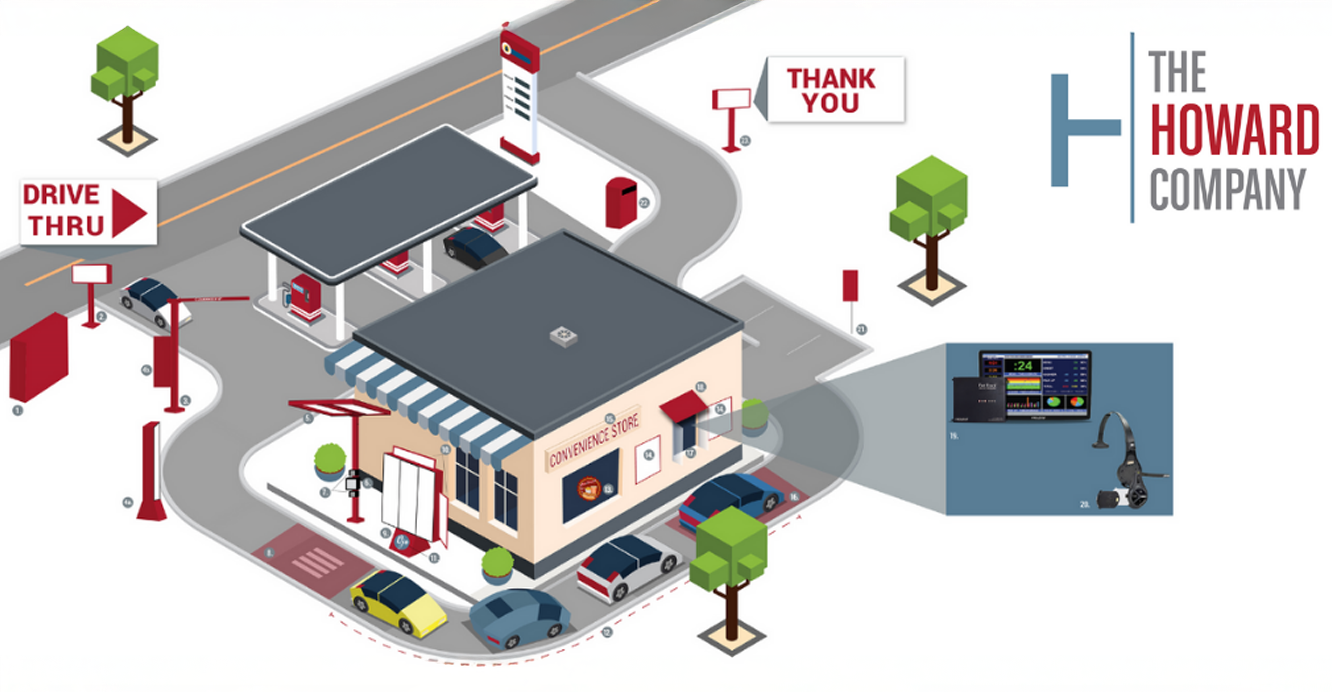
Technology helps smooth the process. Digital menu boards keep choices clear. Kitchen display systems integrate orders seamlessly. Loyalty programs make it personal. Imagine a commuter pulling up and seeing an offer for the exact coffee they usually buy, or a parent getting a prompt for pizza at dinnertime. Some larger chains are even experimenting with AI voice ordering to cut down on errors. Independents don’t need to match that level of investment to benefit. Even a tablet connected to the POS can power a functional, modern-feeling lane. What customers value most is speed, not bells and whistles.
There’s also a cultural element that shouldn’t be overlooked. Drive-thru taps into family life in ways that inside shopping can’t. Parents with kids in car seats will go out of their way to avoid unloading them for a quick stop. Workers on the clock appreciate grabbing lunch without wasting time parking. Women traveling alone late at night often feel safer staying in their car. For all these customers, drive-thru isn’t just a preference. It’s a solution to a real-life barrier. Stores that provide it become not only more convenient, but more trusted.
Operators can amplify that trust with small gestures. Some stores hand out seasonal extras — a fun-size candy bar in October, a peppermint stick in December, or a loyalty coupon for coffee in January. These touches cost pennies but create lasting impressions. Customers may not remember every transaction, but they remember when a store made them smile. Over time, that emotional connection builds loyalty stronger than any discount.
The future of drive-thru in convenience retail is wide open. In urban markets, we’re already seeing experimental micro-stores designed entirely around the car. They may be smaller inside, but with multiple lanes and digital boards outside, they function like convenience restaurants. In suburban and rural areas, larger footprints give operators space to add lanes alongside traditional entrances. EV charging is adding another twist: customers who spend fifteen to thirty minutes powering up are perfect candidates for drive-thru food ordering. Imagine pulling in, starting a charge, swinging through the lane, and picking up a hot sandwich before your car is ready. The synergy is obvious, and some forward-thinking operators are already piloting it.
The bigger picture is about identity. Convenience stores have always been about saving time. But in 2025, saving time doesn’t just mean being nearby. It means being accessible in the exact way customers want. Sometimes that means inside, sometimes it means delivery, and increasingly it means drive-thru. Stores that provide multiple paths to purchase will own the future. Stores that cling to old definitions of convenience may find themselves left behind.
Adding a drive-thru is not always simple. Not every lot has the space. Not every building can accommodate a window. Not every operator has the labor flexibility. But the lesson of the revival is that when it’s possible, it pays off. Customers want it, vendors support it, and competitors are already offering it. Standing still carries risks that are just as real as the costs of building.
At the heart of it, the drive-thru revival is about more than architecture. It’s about understanding what customers value most: time, safety, and routine. When a store makes it possible to grab breakfast without unloading kids, or dinner without getting out in the rain, or coffee without standing in line, it’s doing more than selling food. It’s proving that it knows its customers and cares about their lives. That proof builds relationships that last far beyond a single transaction.
As convenience retail continues to evolve, the drive-thru will become one of its defining symbols. It tells the customer: we’ll meet you where you are, even if that’s behind the wheel. It shows the community: we’re investing in being faster, safer, and more modern. And it reminds the operator: growth comes not just from what you sell, but how you sell it. For decades, drive-thru belonged to restaurants. Now it belongs to convenience too. The revival is real, and the question isn’t whether customers want it. The question is whether you’re ready to roll down the window and join them.
Newsletter
Stay Informed with
Top Headlines
Category

Insights and trends shaping U.S. convenience retail.
Content is provided for informational purposes only and does not constitute legal, financial, or professional advice.