Independent convenience store operators don’t have the luxury of trial and error when it comes to technology. Most are running lean teams, balancing narrow margins, and making decisions with immediate consequences. The bar for adopting digital or operational tech tools is high. It has to work, and it has to work quickly. In an environment where new tools, apps, and platforms are pitched daily, operators need clarity more than complexity. You need to know which tools actually deliver a return, and how to integrate them without disrupting your store’s rhythm. Because if it doesn’t help the business run smoother and/or sell more, it’s just another distraction dressed up as innovation.
“The sweet spot is practicality with impact. Tech that earns its keep.”
There’s no question that the digital transformation of retail has accelerated. Chains are embedding technology into loyalty programs, pricing strategies, foodservice operations, and mobile engagement at a pace that can make independents feel like they’re falling behind. But it’s not about playing catch-up with everything, it’s about identifying the tech investments that give independents leverage. Where a single tool can increase efficiency, reduce mistakes, and create a better customer experience without requiring additional manpower to manage it. The sweet spot is practicality with impact. Tech that earns its keep.

When a customer searches for fuel prices, nearby snacks, or store hours, they’re letting apps and search engines do the work. If your store isn’t showing up accurately in those systems—with you’re not even part of the consideration. This is real-world volume that could have been yours. Fixing this issue requires claiming your listings, keeping them updated, and paying attention to the tools your customers are using, and will be using in the future.
“AI is increasingly growing into every segment of our lives.”
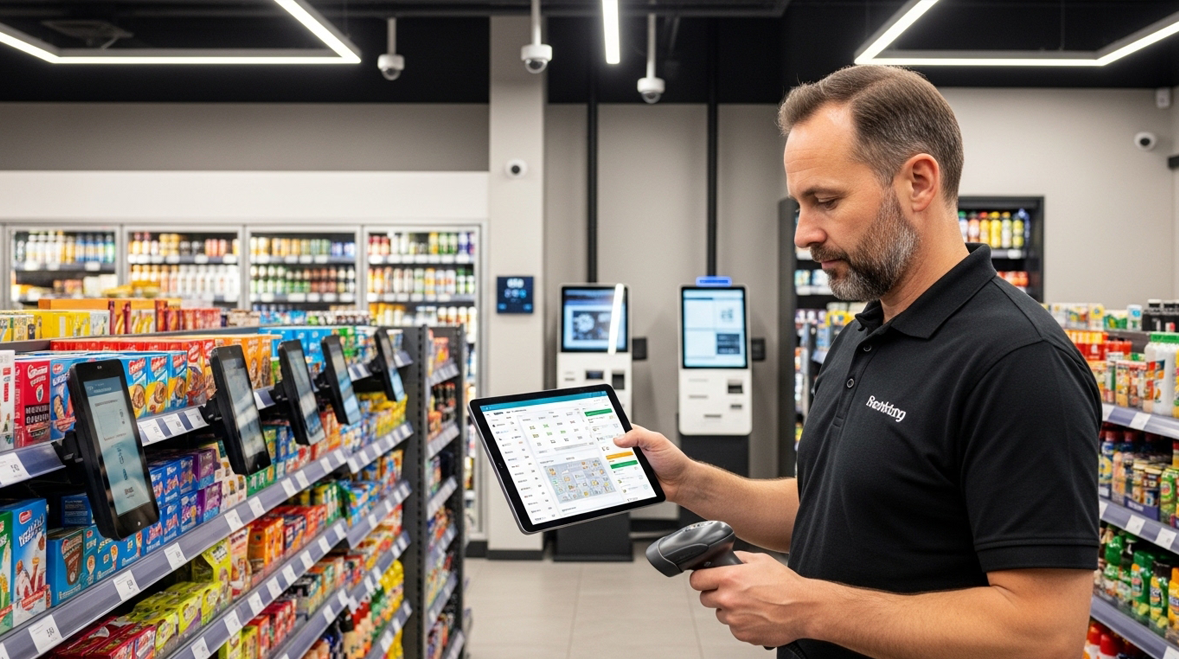
On the inside of the store, the tools that tend to show the fastest return are the ones that touch labor and inventory. Automated scheduling can be a game-changer for small teams, especially when it’s paired with smart time-tracking. When shift assignments are based on traffic patterns and not just gut feel, you avoid overstaffing and reduce overtime without cutting service. And when the clock-in system tracks punches accurately, buddy punching and manual errors go down. All of this leads to fewer conversations about missed hours, fewer surprises on payday, and fewer fire drills on Saturday afternoon because someone forgot they were scheduled.
Inventory systems are another place where technology earns its keep by helping to prevent out-of-stocks, flagging anomalies, and reducing reordering errors. Tools that integrate with your POS to alert you when a fast-moving item is running low are doing more than saving sales, they’re helping you protect customer trust. No one likes walking into a store for a specific item and leaving empty-handed. Multiply that by a week’s worth of missed turns and it adds up. Inventory tech also helps flag loss patterns that would otherwise go unnoticed. Items that are consistently off-count, categories with unexplained shrink, or products that show negative movement.

Loyalty and promotional tools can also deliver strong ROI, but only when they’re connected to the systems you already use. A loyalty program that runs on paper punch cards or sits outside your register flow can be more trouble than it’s worth. But when the POS, the promotional calendar, and the customer engagement tools talk to each other is when things get interesting. You can push personalized offers based on past purchases. You can bundle items in a way that moves full baskets instead of just clearing slow sellers. You can track what’s working, in your store, with your customers. Promotions become less of a guessing game and more of a way to dial in what works best for you and your customers.
AI is increasingly growing into every segment of our lives. There are now practical tools available that use AI to suggest inventory orders, flag unusual sales behavior, and help set pricing based on local competitor data. While you don’t need artificial intelligence running your store, what you might need is smart automation working behind the scenes powered by AI. Tools that cut down on manual work, flag problems faster, and give you a clearer picture of how the store is performing day to day. Some platforms are trying to do too much, and that’s where things fall apart. The best tools for independents tend to be the ones that do one or two things really well and don’t require a month of training to get going.
“Tools that cut down on manual work, flag problems faster, and give you a clearer picture of how the store is performing day to day.”
Shrink is another area where technology can earn its cost back quickly. Video analytics that flag high-risk transactions, sensors that monitor shelf movement, and POS systems that alert you to suspicious refund or void activity can all help you spot theft or fraud patterns early, helping you reduce the margin erosion that comes from not knowing where the losses are. Shrink isn’t usually dramatic, but a steady leak of profit that can be tough to spot.
For operators with foodservice programs, the right technology can help eliminate some of the friction that slows down service and adds inconsistency. Simple kitchen display systems, digital recipe cards, or automated prep reminders can keep orders moving, reduce mistakes, and make it easier for new employees to stay on task.
But for all of this to work, it has to fit into the way your store actually operates. Technology adoption that overwhelms your team, slows down transactions, or creates more work than it saves is a net negative. That’s why the most successful tech implementations start small. Choose a problem you actually want to solve: labor management, out-of-stocks, shrink, promotion tracking, and find a tool that addresses it cleanly. Get your team on board, train them well, monitor the results, and adjust as needed. And only then layer on the next solution. Don’t chase trends, fix pain points with tools that make the day run better. What is your main pain point? Research and find a solution specifically for that.

That’s the difference between thinking like a store owner and thinking like someone who is trying to keep up with someone else’s idea of what a store should be. Choosing clarity over chaos might be the smartest merchandising move you ever make..
Share:
Newsletter
Stay Informed with
Top Headlines
Category




Insights and trends shaping U.S. convenience retail.
Content is provided for informational purposes only and does not constitute legal, financial, or professional advice.