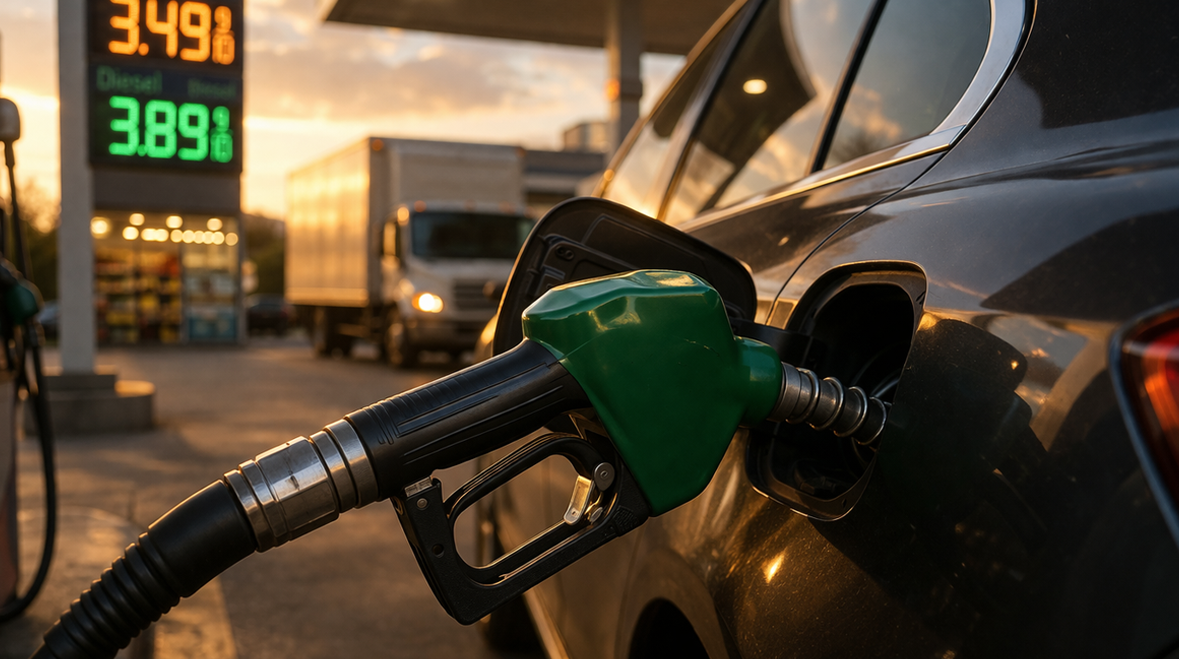
As Middle East disruption pushes gasoline and diesel higher, HRA sees a familiar challenge returning to the Southeast: tighter fuel margins, higher delivered costs, and more pressure to turn forecourt traffic into inside profit.
The first thing to clarify is that the current spike is being driven by Iran-related Middle East supply disruption, not an “Iran-Iraq war” in the classic sense. Reuters reported that the EIA now expects Brent crude to remain above $95 per barrel in the near term, with gasoline and diesel forecasts revised upward as supply concerns intensify around the Strait of Hormuz. (reuters.com) For convenience retailers, that matters immediately. NACS says the industry includes 151,975 stores, with 122,620 selling fuel, and c-stores still sell about 80% of the fuel purchased by U.S. consumers. In 2024, the channel generated $837.4 billion in total sales, including $501.9 billion in fuel sales.
The latest EIA weekly update shows just how fast the market has moved. For the week of March 9, 2026, U.S. regular gasoline averaged $3.502 per gallon, up 48.7 cents in one week, while diesel averaged $4.859, up 96.2 cents. In the Lower Atlantic, gasoline averaged $3.330 and diesel $4.880.
That hits HRA members especially hard because the Southeast is more fuel-dependent than the national average. NACS data shows fuel accounted for 73.8% of sales mix in the Southeast in 2024, versus 65.8% nationally.
“This is not just a fuel story. When diesel jumps, it raises the cost of running the entire store.”
What HRA expects next
Higher pump prices may lift sales dollars, but they do not automatically improve profit. NACS says average gasoline gross margin was 39.7 cents per gallon in 2024, while credit card fees alone cost 8.4 cents per gallon. As prices rise, card costs rise too, while local competition often keeps retailers from expanding margin.
Diesel may be the bigger concern. Reuters reported that diesel markets have been hit harder than gasoline because of the region’s role in global diesel trade. For c-store operators, that means higher freight and higher delivered costs on beverages, snacks, paper, foodservice ingredients, and vendor service.
Inside the store, customer behavior is likely to shift as fuel bills rise. NACS says nearly three in five drivers go inside after fueling. That remains the opportunity—but customers under pressure will be more selective, trading down and focusing on visible value.
Where the margin will come from
Foodservice remains the best protection against forecourt volatility. NACS says foodservice delivered 27.7% of in-store sales and 38.6% of in-store gross margin dollars in 2024. Prepared food alone made up 72.6% of foodservice sales.
For HRA members, that means the winning play is not just lower street price. It is stronger pump-to-store conversion, tighter control of high-velocity SKUs, and better daypart value. In the Southeast, that starts with the basics: commuter breakfast, strong coffee, cold-dispensed beverages, and simple bundled offers that make sense the moment a customer walks in.
“In a fuel shock, foodservice becomes more than a category. It becomes the margin engine.”
How HRA members can prepare now
HRA believes the operators who perform best over the next 60 to 90 days will be the ones who act early.
-
First, protect cash. Higher-cost fuel loads create working capital pressure quickly, especially for smaller operators. Review supply terms, line availability, and delivery cadence now.
-
Second, price with discipline. Use replacement cost, local competition, and target cents-per-gallon—not guesswork.
-
Third, push pump-to-store conversion harder. When customers come inside, the offer needs to be immediate and useful: breakfast bundles, fountain-plus-snack offers, and visible value on core items.
-
Fourth, tighten the inside store around high-velocity SKUs and stronger back-office reconciliation. In volatile markets, shrinkage and invoice drift can quietly wipe out profit.
-
Finally, protect foodservice execution. Customers may tolerate higher fuel prices, but they will not come back for weak coffee or inconsistent breakfast.
The HRA view
HRA sees this fuel shock as a test of operating discipline. The stores that come through strongest will not just be the ones selling fuel. They will be the ones turning fuel traffic into inside margin, protecting cash, and moving with the strength of a retailer network that shares insight like family.
Share:
Newsletter