
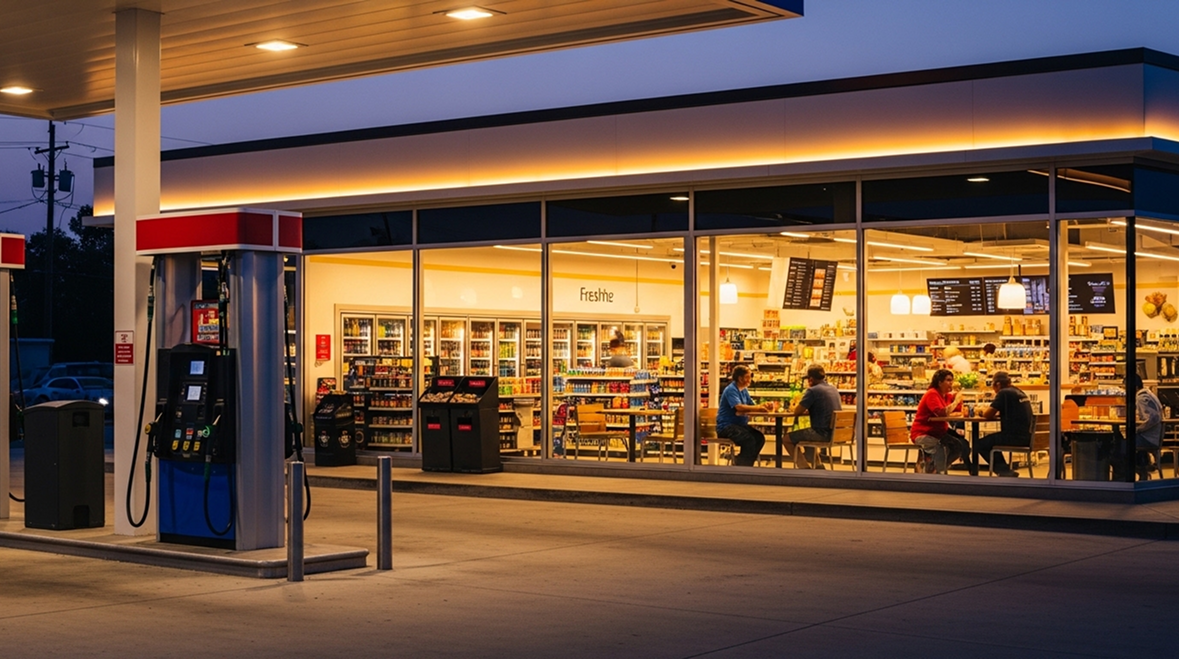
Across the country, large convenience retailers are building stores that look very different from the typical locations many of us grew up with. The buildings are bigger, the kitchens are more prominent, the lighting is warmer, and the seating areas are more inviting. In some locations the store feels more like a quick service restaurant or a small travel center than the traditional fuel and snack stop most people associate with a c-store.
For independent operators watching these developments, the reaction can be mixed. On one hand, the stores are impressive and successful. On the other, they can feel impossible to replicate. When a chain invests millions of dollars into a new build with an oversized footprint and a large food program, it is easy to assume those ideas belong only to companies with deep pockets.
The value of paying attention to these stores is not in copying them directly, but in understanding what they are trying to accomplish. Behind the larger buildings and new technology, many of the design choices reflect simple ideas about how customers move through a store and what drives inside sales.
One of the most visible changes across the industry is the growth of large-format convenience stores. In many markets, chains are building locations that are significantly bigger than the traditional footprint. These stores often include expanded fuel islands, large parking areas for trucks and trailers, and interiors that feel open rather than cramped.
Part of the reason for this shift is simple math. As foodservice becomes a larger part of convenience retail, stores need space to support it. Kitchens require room for equipment, prep areas, and food displays. Even beverage programs have expanded to include large fountain areas, coffee stations, and specialty drink equipment.
Chains such as Buc ee’s have taken the concept to an extreme, building massive roadside locations that function almost like travel destinations. These stores are designed to handle enormous volumes of traffic while offering a wide range of food and merchandise. Customers often spend far more time inside than they would at a traditional convenience stop.
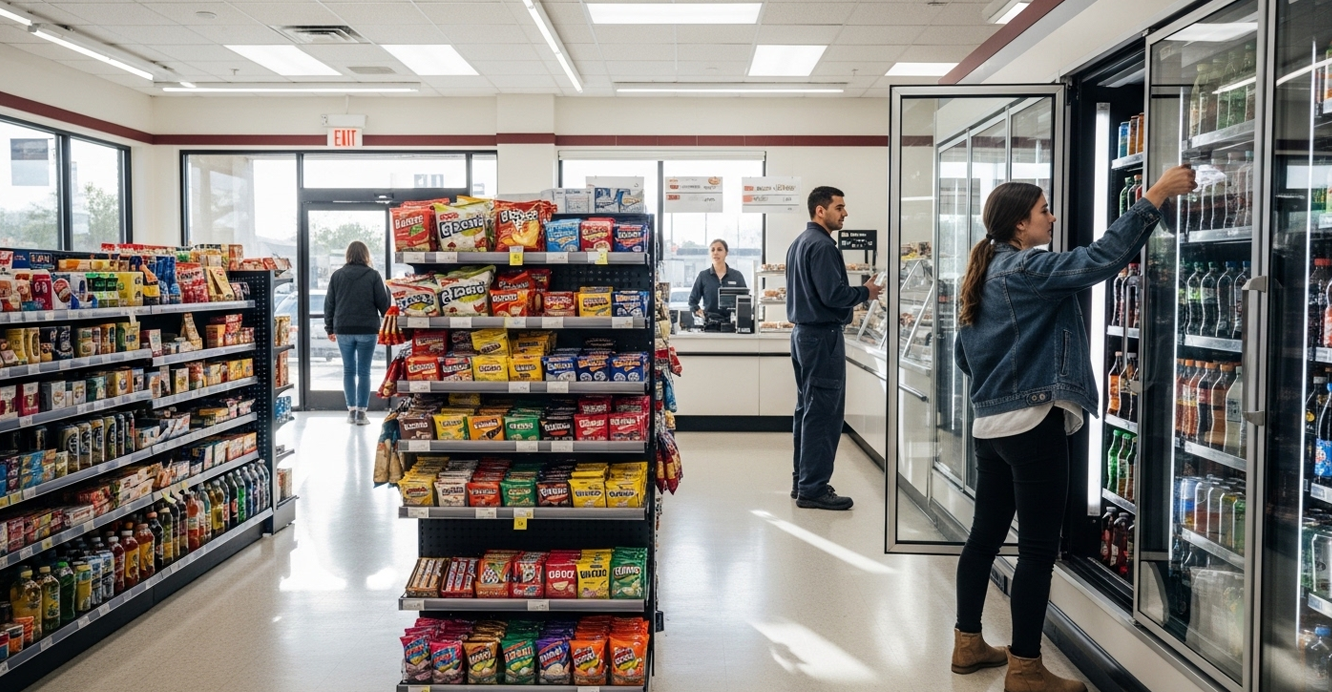
Other chains have taken a slightly different approach. Companies like Sheetz and Wawa have built their reputations around made-to-order food programs that operate more like quick service restaurants than traditional convenience kitchens. Customers place orders through kiosks or mobile apps, and often purchase additional items while they wait for fresh food to be prepared.
The common thread across these different formats is the growing importance of food. For decades, convenience stores focused primarily on packaged goods, but today many chains see fresh food as the engine that drives inside sales growth.
Restaurant style menus have become more common in convenience retail, with offerings that extend far beyond hot dogs or other roller grill items. Sandwiches, breakfast platters, fried chicken, pizza, tacos, and even specialty items inspired by regional cuisines now appear in many stores. Some chains operate commissary kitchens that supply multiple locations, allowing them to maintain consistency across a large network of stores.
For independent operators, the lesson here is not necessarily to build a full-scale restaurant inside the store. The takeaway is that customers increasingly see convenience stores as places where they can purchase real meals rather than just snacks.
A well executed food program doesn’t need to be complicated to succeed. Many stores perform extremely well with a focused menu built around a handful of dependable items. Breakfast biscuits, pizza slices, fried chicken, or freshly prepared sandwiches can become strong traffic drivers when they are prepared consistently and priced competitively.
Another area where chains have invested heavily is technology. Self-checkout stations, digital ordering kiosks, and mobile apps are becoming more common across the convenience landscape. These tools are designed to reduce friction during busy periods and give customers more ways to interact with the store.
In locations with heavy foodservice traffic, digital ordering systems allow customers to customize meals without standing in line at the counter. Orders move directly to the kitchen, and customers can continue shopping while their food is prepared.
Self-checkout has also gained attention as a way to speed up transactions for customers purchasing only a few items. In stores where a large share of traffic involves quick beverage purchases, this technology can reduce lines and free employees to focus on other tasks.
The usefulness of these systems depends heavily on the size and volume of the store. Technology that works well in a busy urban location with thousands of daily transactions may not make sense in a smaller rural store where personal interaction with customers remains part of the appeal.
What is worth paying attention to is how these tools change the flow of the store. Chains often design their layouts so customers can move easily between ordering food, selecting beverages, and paying for their purchases. The goal is to keep traffic moving while still encouraging customers to browse.
“Store design has evolved in ways that are worth noting.”
Many new convenience stores feature higher ceilings, improved lighting, and clearer sightlines from the entrance to key areas such as the beverage cooler and food counters. These design choices create a sense of openness that encourages customers to explore rather than rushing directly to the register.
Lighting plays a surprisingly large role in this effect. Brighter, warmer lighting can make food displays more appealing and improve the overall atmosphere of the store. Customers may not consciously notice the change, but it influences how comfortable they feel spending time inside.
Traffic flow is another area where chains have become more deliberate. Instead of forcing customers through narrow aisles, newer layouts often guide visitors along natural paths that expose them to high-margin categories like beverages, snacks, and prepared foods.
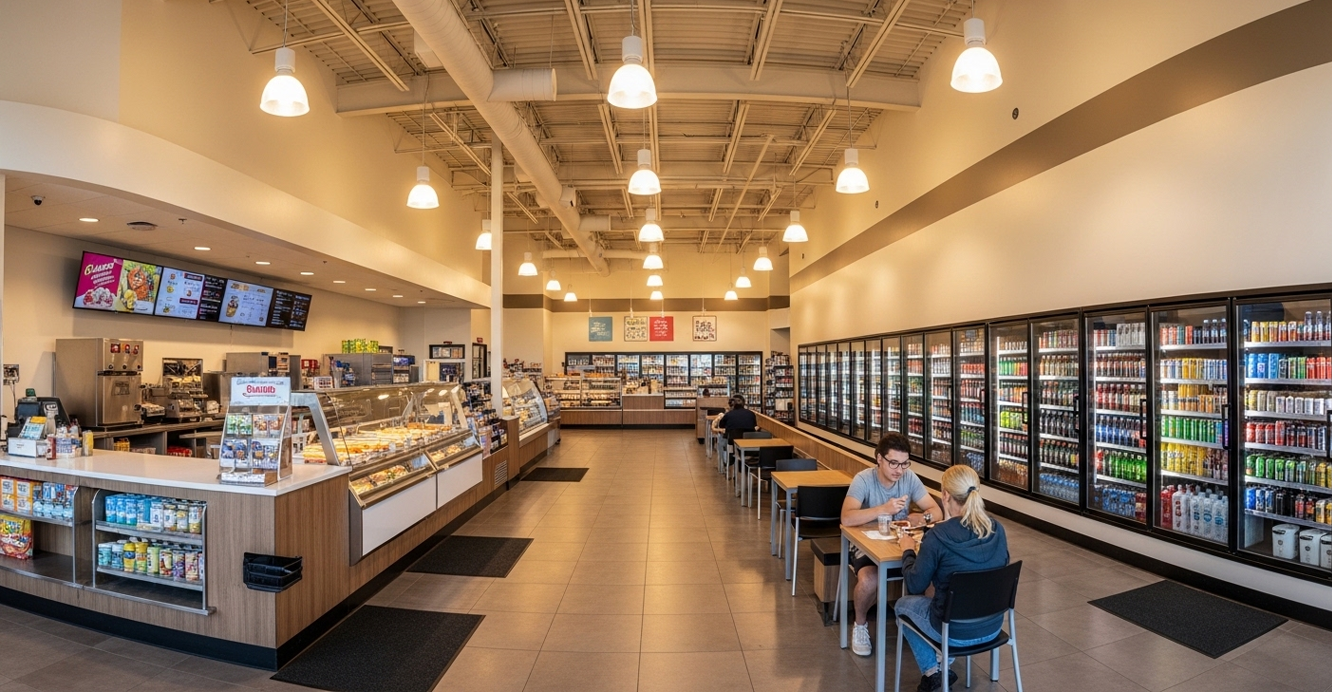
These design ideas can often be adapted without rebuilding the entire store. Small adjustments to product placement, lighting, or aisle layout can improve visibility and make the store feel more open. Moving popular items into a high traffic path, or creating better sightlines from the entrance can influence how customers navigate the space.
“Perhaps the most important lesson from the big chains is not about size or technology at all.”
It is about clarity. The best performing stores tend to make the shopping experience simple and intuitive. Customers can quickly understand where to find drinks, where to order food, and how to complete their purchase.
When a store feels organized and easy to navigate, customers spend less time searching and more time deciding what they want to buy.
“Independent operators often have an advantage here that large chains struggle to replicate.”
Local owners know their communities. They understand what their customers like to eat, what drinks sell best, and what times of day traffic peaks. That knowledge allows them to adapt quickly without waiting for corporate approval or nationwide rollouts.
Large chains may lead the way in building new store formats, but the underlying principles driving those changes are not exclusive to big companies. Clear layouts, strong food programs, comfortable environments, and efficient transactions are ideas any operator can apply.
When we study the big chains with a practical eye, they often discover that the most useful lessons are also the simplest ones.
Share:
Newsletter
Stay Informed with
Top Headlines
Category




Insights and trends shaping U.S. convenience retail.
Content is provided for informational purposes only and does not constitute legal, financial, or professional advice.