
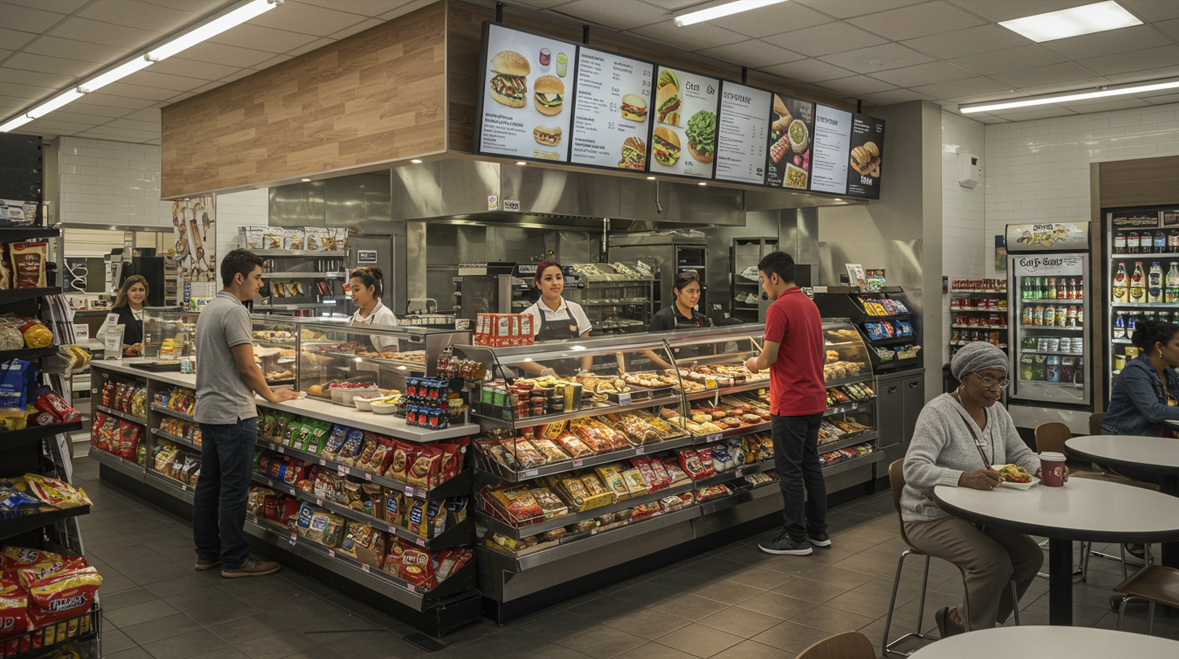
Building a Mini QSR in Your Store
The convenience store industry is undergoing a transformation, with foodservice emerging as the single most significant driver of growth and differentiation. As consumers demand more from their shopping experience, c-stores have the opportunity to redefine themselves as quick-service restaurant (QSR) hybrids, offering high-quality meals, snacks, and beverages that rival fast food chains. Building a successful foodservice program isn’t just about adding new products; it’s about creating a mini QSR that balances speed, quality, and profitability while meeting the evolving needs of today’s customers.
In 2025, foodservice is more than a trend— it’s a necessity for convenience stores looking to stay competitive. We will explore the steps, strategies, and success stories behind the foodservice revolution, offering practical insights for c-store operators ready to make the leap.
Why Foodservice Matters More Than Ever
Consumers today expect more from convenience stores. They want fresh, high-quality food options that fit seamlessly into their busy lives. According to a recent report by Technomic, 43% of consumers purchase food from c-stores at least once a week, with many citing speed and convenience as the primary motivators.
Moreover, foodservice accounts for 23% of in-store sales at c-stores, according to the National Association of Convenience Stores (NACS), making it a critical revenue stream. But this isn’t just about profitability— it’s about customer retention. Stores that offer robust foodservice programs create stronger loyalty and drive repeat business, ensuring they remain competitive against quick-service restaurants (QSRs) and delivery platforms.
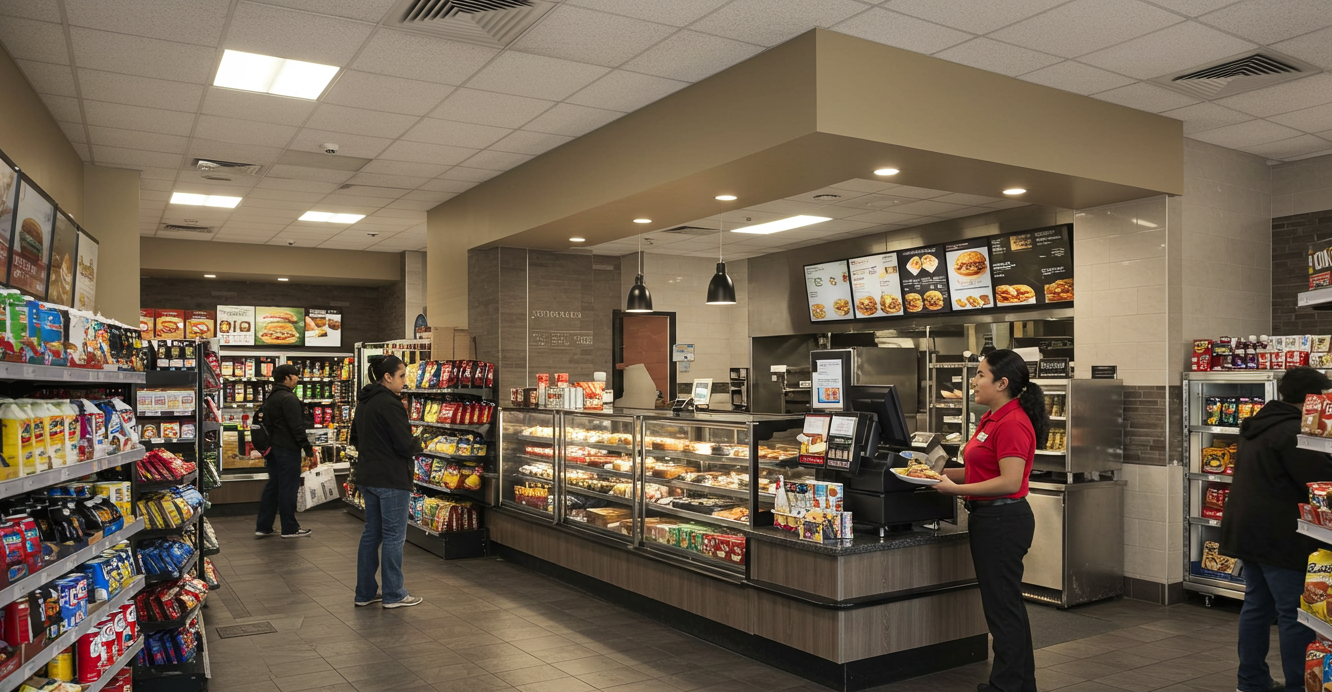
Practical Steps to Build or Expand a Foodservice Program
Creating a mini QSR within your convenience store requires a thoughtful approach. Whether you’re starting from scratch or expanding an existing program, these steps can guide you toward success:
1. Assess Your Space & Infrastructure Before launching a foodservice program, evaluate your store’s physical space. Do you have room for food prep areas, refrigeration, and storage? Can you reconfigure your layout to create a seamless flow for customers ordering and picking up food? If space is limited, consider starting small with grab-and-go items or self-serve stations, then scaling up as demand grows.
2. Understand Your Audience Tailor your offerings to your customer base. Commuters may prefer portable breakfast options, while families might value hearty meals like pizza or fried chicken. Conduct surveys or analyze purchasing data to understand what your customers want most.
3. Start with Proven Concepts Begin with food categories that have a track record of success in c-stores. Pizza, for example, is a perennial favorite that delivers high margins and broad appeal. Grab-and-go sandwiches and salads cater to health-conscious consumers, while coffee stations can draw customers in during morning and afternoon rushes.
4. Invest in Staff Training Quality foodservice requires skilled employees. Invest in training that covers food safety, preparation techniques, and customer service to ensure a consistent, high-quality experience.
5. Leverage Partnerships Work with distributors like Core-Mark or Sysco to streamline sourcing and inventory management. Many suppliers offer turnkey foodservice programs that include equipment, recipes, and marketing materials, making it easier to launch or expand your offerings.
Balancing Speed, Quality, and Profitability
One of the greatest challenges in foodservice is striking the right balance between speed, quality, and profitability. Here’s how c-stores can achieve this balance: Speed: Invest in equipment like high-speed ovens, which can cook items like pizzas or sandwiches in minutes. Self-service kiosks can also streamline the ordering process, reducing wait times and freeing up staff for other tasks.
Quality: Focus on fresh ingredients and consistent preparation. Even prepackaged grab-and-go items should be high-quality, with clear labeling to emphasize freshness and nutritional value. Consider offering premium options like locally sourced produce or artisan-style sandwiches to stand out from competitors.
Profitability: Monitor margins closely to ensure your foodservice program contributes positively to your bottom line. While high-quality ingredients can justify premium pricing, also consider offering combo deals or loyalty rewards to encourage repeat Purchases.
Popular Concepts That Deliver Results
Certain foodservice concepts have proven to be particularly effective for c-stores looking to establish themselves as mini QSRs. Pizza: Pizza is a universal favorite with excellent margins. Offering customizable, made-to-order pizzas or pre-prepared slices can appeal to both individual customers and families. Chains like Casey’s General Store have made pizza a cornerstone of their brand, generating significant revenue and customer loyalty.
Grab-and-Go: Pre-packaged sandwiches,salads, and wraps cater to customers seeking healthy, portable options. These items are ideal for commuters or busy professionals and can be easily scaled to meet Demand.
Coffee Stations: A strong coffee program is essential for drawing morning traffic. Invest in high-quality beans, flavored syrups, and self-serve machines to create a customizable coffee experience. Many stores also offer loyalty programs specifically for coffee, encouraging daily visits.
Next Steps for C-Store Operators
If you’re ready to embrace the foodservice revolution, here are actionable next steps to get started:
Test your foodservice offerings in one or two locations before rolling them out system- wide. Gather feedback from customers and employees to identify areas for improvement. Use digital signage, social media, and instore promotions to showcase your new foodservice options. Highlight features like freshness, quality, and convenience to attract new customers.
Track sales data, customer feedback, and operational efficiency to measure the success of your program. Adjust your offerings and processes as needed to maximize results. Several convenience stores have already embraced the foodservice revolution, demonstrating what’s possible with the right strategy.
As the convenience store industry continues to evolve, foodservice will play an increasingly critical role in shaping its future. By investing in high-quality offerings, leveraging proven concepts, and adapting to consumer needs, c-stores can establish themselves as leaders in the quick-service Space.
2025 is a year of opportunity for operators willing to embrace change. With careful planning, strategic investments, and a focus on delivering exceptional customer experiences, any c-store can become a destination for foodservice excellence.
Share:
Newsletter
Stay Informed with
Top Headlines
Category


Insights and trends shaping U.S. convenience retail.
Content is provided for informational purposes only and does not constitute legal, financial, or professional advice.