
Walk into a newly built convenience store today, and there is a good chance you will see at least one piece of technology that was not there a few years ago. A touchscreen kiosk near the kitchen, a self-checkout station near the front counter, or maybe even both.
For larger chains, these systems have become standard. They promise faster service, lower labor costs, and a more streamlined customer experience. It looks like the industry is moving quickly toward an automated future.
“The gap between what large chains are building and what independent stores actually need is where the conversation around automation becomes more practical.”
But step into an independent store, especially in a smaller market, and it looks very different. The same customers come in every day, walk up to the counter, exchange a few words with the cashier, pay for their items, and head out. The idea of replacing that interaction with a screen feels unnecessary, and even counterproductive.
The gap between what large chains are building and what independent stores actually need is where the conversation around automation becomes more practical. The technology itself is not the question. Most of these systems work really well. The real question is whether they solve a problem that exists in your store.
One of the most visible forms of automation in convenience retail today is the ordering kiosk. These are most commonly found in stores with expanded foodservice programs, where customers can browse a menu, customize their order, and send it directly to the kitchen without speaking to an employee.
Chains like Sheetz and Wawa have built entire food programs around this model. Customers walk in, place their order on a screen, and then wait while the kitchen prepares the food. It is a system designed for speed, accuracy, and high volume.
In the right environment, kiosks can work extremely well. They reduce the need for employees to take orders at the counter, which allows staff to focus on preparing food. They also minimize communication errors, since customers enter their own selections directly into the system.
“What problem is the technology solving?”
For stores with heavy foodservice traffic, especially during peak hours like breakfast and lunch, this can make a noticeable difference. Lines move faster, orders are more consistent, and customers have greater control over what they order.
But outside of those high-volume situations, the benefits become less clear. In a smaller store with steady but not overwhelming food orders, adding a kiosk may not significantly improve efficiency. In some cases, it may even slow things down if customers are unfamiliar with the system or prefer to order in person.
Customer acceptance is one of the most important factors to consider. Not every customer wants to interact with a screen. Some prefer the simplicity of speaking directly to an employee, especially when ordering food. Others may feel uncomfortable navigating a digital menu, particularly older customers or those who visit the store regularly.
When a system creates hesitation or confusion, it can disrupt the flow of the store rather than improving it. And in reality, it can make a customer feel confused and frustrated, and they will want to talk to an employee that isn’t there.
“While some may appreciate the speed of automation, others may miss the human element that made the store feel comfortable.”
Self-checkout presents a different set of opportunities and challenges. In theory, it offers a straightforward benefit: Customers with only a few items can scan and pay quickly without waiting in line, which reduces congestion at the counter.
In stores with high traffic and frequent small purchases, this can be useful. A customer grabbing a single drink or snack can complete the transaction quickly and move on, freeing up employees to assist other customers or handle foodservice tasks.
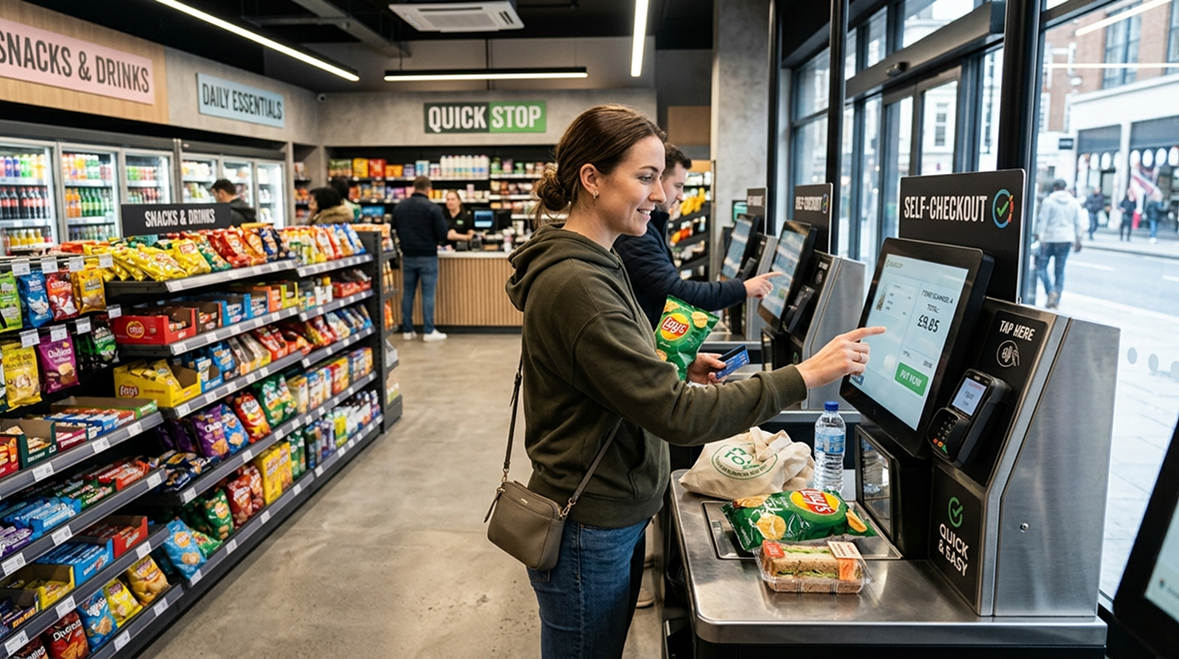
But self-checkout introduces concerns that many operators take seriously. The most common is shrink. When customers scan their own items, the potential for mistakes or intentional theft increases. Even in well-managed environments, some level of loss is almost inevitable.
For larger chains, this loss can often be absorbed into the overall business. For independent operators working with tighter margins, even small increases in shrinkage can have a noticeable impact.
There is also the question of oversight. Self-checkout systems still require employee supervision, particularly during busy periods. If a store must assign an employee to monitor the area, the labor savings may be less significant than expected.
Beyond shrink, there is the issue of reliability. Technology requires maintenance. Systems need updates, hardware can fail, and software issues can disrupt operations. When a register goes down in a traditional setup, a backup system or manual process can often keep things moving. When a digital system fails, the disruption can be more complicated.
Cost is another factor that cannot be ignored. Installing kiosks or self-checkout systems requires an upfront investment, and ongoing costs may include software subscriptions, maintenance, and support services. For some stores, the return on that investment is clear. For others, it may take years to justify.
All of this leads back to the central question. What problem is the technology solving?
In a store where long lines regularly form at the counter, self-checkout may improve the customer experience. In a location with a strong food program and high order volume, kiosks may help manage demand more effectively.
But in a store where traffic is steady, and customer interactions are part of the appeal, automation may add complexity without delivering meaningful benefits.
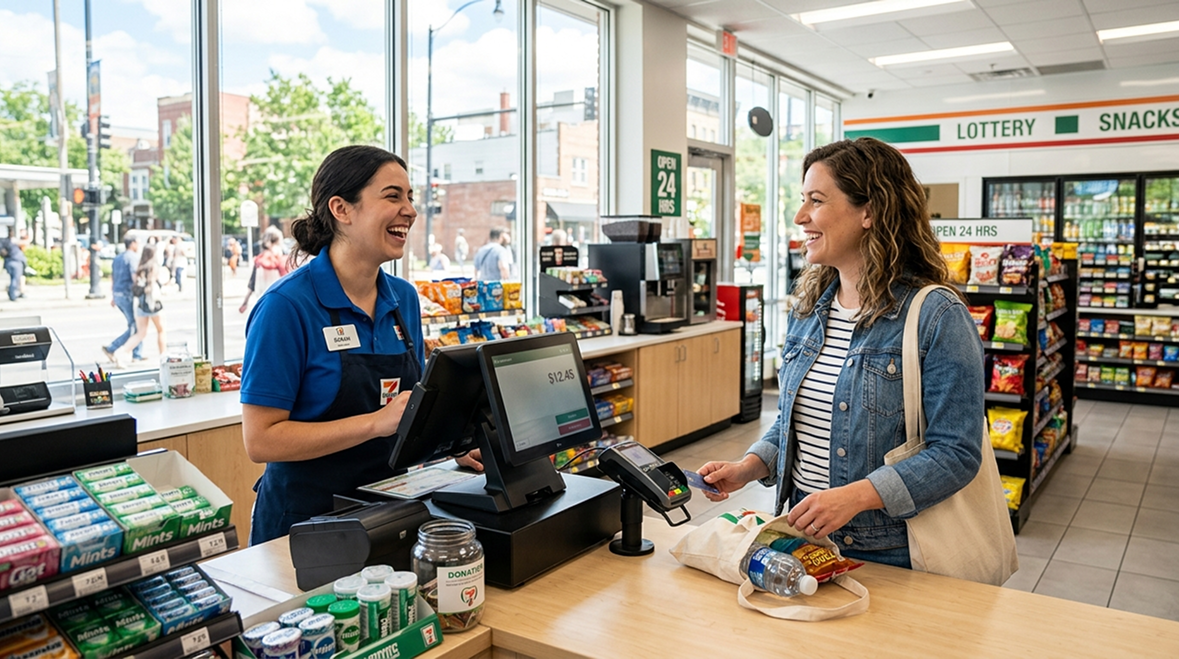
It is also worth considering the role of personal interaction in convenience retail. For many independent stores, customer relationships are a defining strength. Regulars know the staff and friendly conversations happen at the counter. That familiarity creates a sense of trust and loyalty that is difficult to replace with technology.
Removing too much of that interaction can change how customers feel about the store. While some may appreciate the speed of automation, others may miss the human element that made the store feel comfortable.
“Customer acceptance is one of the most important factors to consider.”
That does not mean technology has no place in independent stores. In fact, many operators are already using it in ways that make sense for their business. Back office systems, inventory tracking, and digital price management tools can improve efficiency without affecting the customer experience.
Even within the store, smaller technology upgrades can make a difference. Improved point-of-sale systems, better kitchen display screens, or simplified ordering processes can enhance operations without requiring customers to change their habits.
The key is choosing technology that supports the way the store already works, rather than forcing the store to adapt to it.
Automation will continue to expand across the convenience industry, particularly as labor challenges persist and customer expectations evolve. Larger chains will likely keep experimenting with new systems, refining what works and discarding what does not.
“When customers scan their own items, the potential for mistakes or intentional theft increases.”
Independent operators don’t need to follow every trend. They have the advantage of being able to carefully evaluate each idea and adopt only what fits their specific situation.
In the end, the goal is not to automate for the sake of automation; it is to run a store that operates smoothly, serves customers well, and remains profitable.
If technology helps achieve that, it is worth considering. If it complicates the operation without solving a real problem, it is better left alone.
Share:
Newsletter
Stay Informed with
Top Headlines
Category




Insights and trends shaping U.S. convenience retail.
Content is provided for informational purposes only and does not constitute legal, financial, or professional advice.