Order at the Pump and Ads that Drive Baskets
For decades, the gas pump was little more than a tollbooth for motorists. Customers swiped a card, pumped their fuel, and drove off, often without so much as glancing at the storefront ten yards away. For c-store owners, that scenario was maddening. The store was stocked, staffed, and ready, yet countless drivers treated it as little more than scenery while they refueled. The money was in the lot, but it wasn’t making its way inside. That reality has shaped convenience retail for years — until now.
Technology is transforming the forecourt into a selling channel in its own right. Ordering at the pump and targeted pump advertising are no longer experiments confined to trade show demos. They are live in markets across the country, and in stores that deploy them with intention, they are delivering real results. Forecourt commerce is becoming a profit lever, not just a customer convenience.

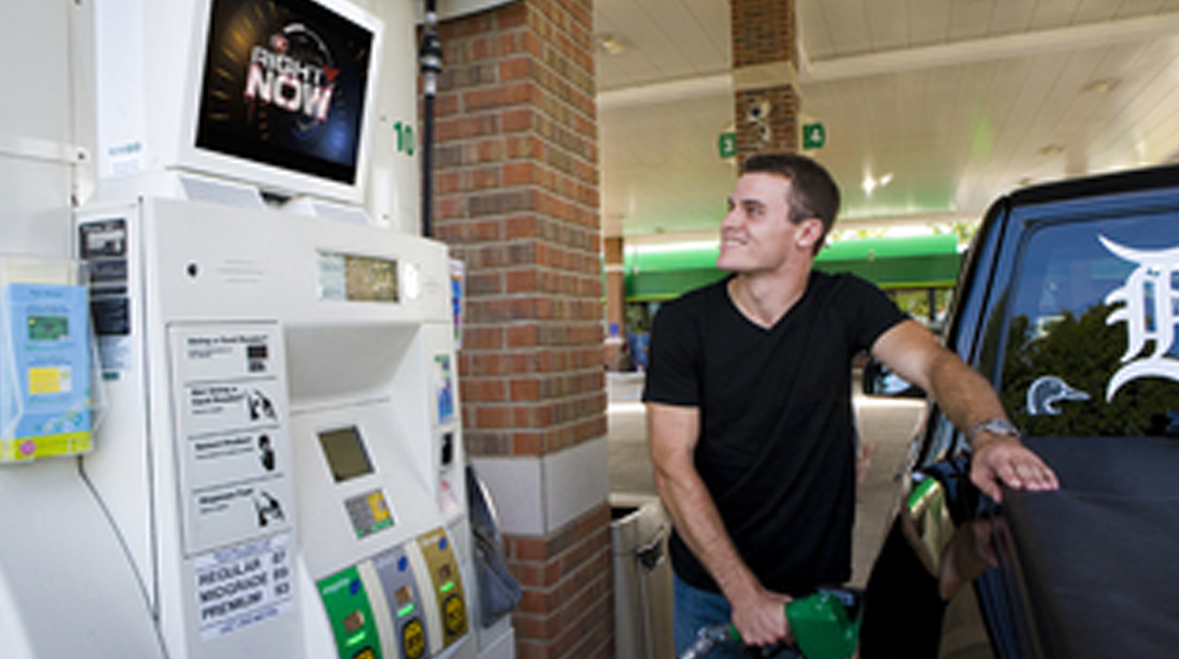
The timing couldn’t be better. Customers spend an average of three to five minutes at the dispenser. That’s an eternity in advertising terms — longer than a TV spot, a radio ad, or a typical social media impression. The pump has always held attention, but now it can channel it into action. High-definition screens, contactless payment options, and loyalty integrations have turned the dispenser into a digital storefront. And unlike billboards or banner ads, pump screens know exactly when and where a customer is making a purchase decision. That’s the advantage operators can no longer afford to ignore.
Consider the evolution. In the early 2000s, some chains experimented with “gas station TV” — looping content meant to entertain drivers. The concept had novelty, but it rarely drove incremental sales. Customers tuned it out. The leap forward came when those same screens were tied directly into store systems, allowing real offers to be made and acted on in real time. Instead of passive entertainment, the pump became interactive. A driver could see an ad for a hot coffee, tap once to accept, and have the order routed inside. By the time they stepped into the store, their drink was ready. That shift — from billboard to transaction point — is what makes today’s pump-side commerce different.
Operators piloting these systems report meaningful lift. Industry case studies show double-digit increases in featured product sales when pump offers are tied to time of day and weather. Coffee promotions spike during cool mornings. Frozen drinks surge in the heat. Pizza and bundled meals move faster in the evening. Even impulse items like candy bars and energy drinks see traction when the message is contextual. One operator in Texas reported a 15 percent increase in morning food sales within weeks of turning on daypart-specific pump offers. The driver’s mindset was already tuned to breakfast; the pump simply nudged them inside.

The real breakthrough comes when loyalty and personalization are layered in. Imagine a customer who consistently buys an energy drink two or three times a week. When they swipe their loyalty card at the pump, the screen could automatically offer them a deal on that very brand. Another customer who has been earning points toward a free coffee could be reminded that they’re just one purchase away from redeeming. These are not generic ads. They are personalized prompts, and research shows that personalized offers can drive conversion rates two to three times higher than standard promotions. In other words, when the pump knows your habits, it sells more effectively.
Some owners worry that customers don’t want to be pitched while they fuel. But surveys tell a different story. Most drivers say they are open to offers if they feel relevant, timely, and easy to act on. The friction comes when systems are clunky. If it takes six taps to order a sandwich, customers won’t bother. If the menu is confusing or the screen freezes, they won’t try again. The challenge for operators is not whether customers will engage, but whether the experience is smooth enough to make it worth their time. That means investing in user-friendly software, training staff to fulfill quickly, and testing the flow before going live.
Operational readiness is critical. Pump-side orders must be fulfilled seamlessly, or the entire system backfires. If a driver accepts an offer for hot wings and then waits ten minutes inside because the staff didn’t see the order, they may never use the feature again. The technology itself is usually reliable — tickets drop into the POS or kitchen queue automatically — but human execution is what makes the promise real. Stores that succeed treat pump orders as a priority, not an afterthought. Staff know to check the queue constantly, and orders are staged before the customer even walks in. That kind of coordination makes the process feel magical. Without it, it feels broken.
Advertising alone has its place too. Even when no order is placed, pump video builds awareness and nudges behavior. Studies show that customers exposed to pump ads recall brands at higher rates and are more likely to make an unplanned purchase inside. For seasonal promotions, the pump can be especially powerful. October offers a perfect example: candy sales, pumpkin spice drinks, and game-day bundles are all prime candidates for forecourt advertising. A driver who sees a candy promo while filling up before trick-or-treating is far more likely to walk inside and stock up.
Vendor partnerships make this even more attractive. Beverage companies, snack brands, and even QSR suppliers are investing heavily in forecourt media. For c-stores, that means potential co-op dollars or subsidized equipment. If you are considering upgrading dispensers, this is the time to ask your vendors how they can support it. They benefit from the exposure, and you benefit from both the sales lift and the additional revenue stream. Some operators are already generating advertising income directly from pump screens, creating a dual benefit: higher product sales and direct media revenue.
Looking further ahead, pump commerce will likely merge with mobile and loyalty into one ecosystem. Picture this: a driver pulls in, taps their loyalty app, selects fuel, and instantly sees personalized offers on the pump screen. They order a meal, apply points toward the purchase, and pay with a digital wallet, all before the nozzle clicks. By the time they step inside, their order is bagged and waiting. That’s not science fiction. Large chains are already piloting systems that come close. And as costs come down, independents will be able to adopt similar capabilities.
Artificial intelligence is set to make this even sharper. Instead of generic promotions, AI can analyze transaction history, weather, traffic patterns, and even regional events to decide what to promote in real time. On a rainy afternoon, the pump might prioritize hot coffee and soup. On a Friday evening near a stadium, it might push beer and snacks. These micro-adjustments, made automatically, can optimize every fueling interaction for sales. For owners, that means the pump stops being static hardware and becomes a dynamic, data-driven sales engine.
The rise of EVs adds another dimension. While adoption is uneven, one thing is certain: charging sessions take longer than fueling. That makes forecourt commerce even more relevant. Drivers waiting 15 to 30 minutes at a charger are highly motivated to engage with food and beverage offers. Early pilots show that EV drivers are more likely to order ahead at the pump or charger, knowing they’ll have downtime anyway. For c-stores investing in EV infrastructure, pairing it with robust pump-side ordering systems will be essential to capturing that dwell time.
The cost question is real. Upgrading dispensers and integrating software can feel daunting, especially for independents. But the return on investment is increasingly clear. Incremental sales from pump-side ordering add up quickly, especially in food and beverage categories with healthy margins. Advertising revenue from vendors offsets costs even further. And the customer experience benefits — convenience, speed, personalization — help build loyalty in ways that are hard to measure but easy to feel. The bigger risk may not be the cost of upgrading, but the cost of standing still. Customers are coming to expect interactivity. A forecourt that looks outdated risks making the entire store feel behind the times.
The pump has always been the front door of the business. For too long, it was a door many customers never walked through. Now, with technology and execution, that door is opening wider. The question is not whether pump-side commerce can work — the evidence says it does. The question is whether operators are ready to embrace it, to iron out the details, and to make it seamless. Because when the pump stops being just about fuel and starts being about engagement, the entire store benefits.
October is the right time to begin. Cooler mornings call for coffee offers. Football weekends demand bundle promotions. Holiday travel invites snack and beverage deals. Customers are already in the right frame of mind. The job of the store is to meet them there, at the pump, where attention is captive and opportunity is waiting.
The forecourt has finally become more than a place to fuel. It’s becoming a place to sell, to connect, and to grow. And for c-store owners looking to stay ahead in a competitive market, that shift could be the difference between another routine quarter and one that truly converts.
Share:
Newsletter
Stay Informed with
Top Headlines
Category

Insights and trends shaping U.S. convenience retail.
Content is provided for informational purposes only and does not constitute legal, financial, or professional advice.